
Good balance and stability can make everyday movement feel easier and more confident. They help you stand, walk, reach, turn, and change direction with better control. The good news is that you do not need a gym or special equipment to practice these skills. A small, clear space and a few minutes of regular practice can make a helpful difference.
Balance exercises should feel controlled, not rushed. Use a sturdy chair, countertop, or wall for support when needed. Start with simple movements, and gradually make them more challenging as you become comfortable.
Create a Safe Practice Space
Before exercising, take a moment to prepare your surroundings. Good footing and enough room can help you stay focused.
Try these simple steps:
– Remove loose rugs, cords, toys, and other items from the floor.
– Choose a flat, firm surface.
– Wear comfortable shoes with secure soles, or follow the instructions for the exercise you are doing.
– Keep a sturdy chair, counter, or railing nearby.
– Make sure the area is well lit.
– Keep water nearby, especially if you are practicing for more than a few minutes.
Avoid using lightweight furniture for support. A table or chair that slides easily may create more risk than help.
Begin With Standing Alignment
Before adding movement, practice standing with good alignment. Stand tall with your feet about hip-width apart. Let your shoulders relax, keep your head level, and look straight ahead. Distribute your weight evenly across both feet.
Hold this position for 20 to 30 seconds while breathing naturally. Notice whether you lean forward, backward, or to one side. Try to make small adjustments rather than large movements.
You can repeat this exercise several times. As it becomes easier, try standing with your feet a little closer together. Keep a hand near a stable surface so you can reach for support if necessary.
Practice Weight Shifts
Weight shifting teaches your body to move control from one side to the other. It is also similar to the natural movements used when walking and reaching.
Stand near a counter or sturdy chair. Slowly shift your weight onto your right foot while keeping your left foot lightly on the floor. Return to the center, then shift toward your left foot.
Repeat the movement 8 to 10 times on each side. Keep your upper body tall and move at a steady pace. The goal is smooth control, not a large side-to-side lean.
You can also practice forward and backward shifts. Move your weight slightly toward the balls of your feet, return to center, and then shift gently toward your heels. Keep your feet flat and avoid rocking quickly.
Try Heel to Toe Walking
Heel-to-toe walking can help you practice control while moving forward. Stand beside a wall or counter for support. Place one foot directly in front of the other, with the heel of the front foot close to the toes of the back foot.
Take several slow steps in a straight line. Look ahead rather than down at your feet. If the position feels difficult, widen the space between your feet while keeping your steps slow and deliberate.
Practice for 30 to 60 seconds, rest, and repeat. You can walk beside a counter so you have a stable surface within reach.
Add Single Leg Stands
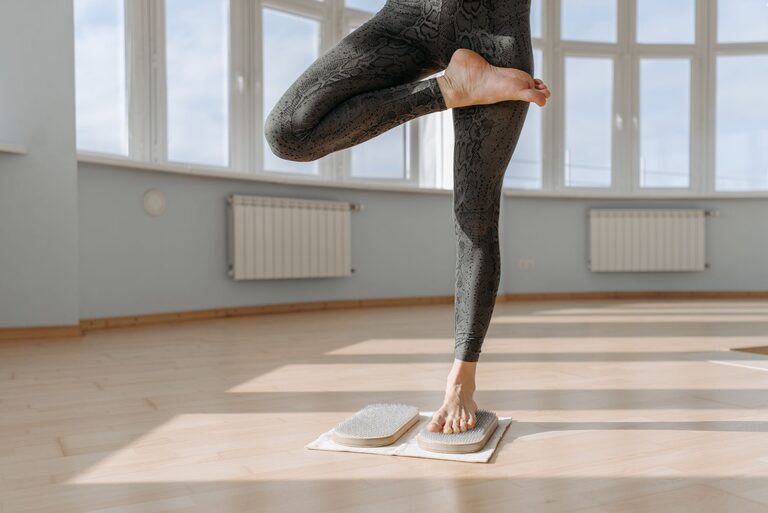
Standing on one leg challenges balance and helps you practice shifting weight with control. Begin next to a sturdy chair or counter. Lift one foot just a few inches from the floor and hold the position for 5 to 10 seconds.
Place the foot down carefully, then switch sides. Repeat 3 to 5 times per leg.
As your control improves, gradually increase the hold time. Keep your standing knee relaxed rather than locked. You may also lightly touch the counter with one or two fingers instead of gripping it tightly.
Never rush to remove support. A steady, well-controlled hold is more useful than a longer hold with poor form.
Strengthen the Legs and Core
Strength and balance work well together. Stronger legs and a stable midsection can make everyday movements feel more controlled.
Sit to Stand
Sit toward the front of a sturdy chair with your feet flat on the floor. Lean forward slightly and stand up without using your hands if you can do so comfortably. Pause, then slowly lower yourself back into the chair.
Repeat 8 to 12 times. Keep your knees lined up with your feet, and avoid dropping quickly into the seat. If needed, use your hands on the chair or choose a higher seat.
Calf Raises
Stand behind a sturdy chair and hold it lightly. Slowly rise onto the balls of your feet, pause, and lower your heels with control.
Repeat 10 to 15 times. Keep your weight spread across both feet and avoid bouncing.
Side Leg Lifts
Hold a counter or chair. Slowly move one leg out to the side without leaning your upper body. Bring it back to the starting position, then switch sides.
Complete 8 to 12 repetitions per leg. Keep the movement small and controlled.
Use Everyday Activities as Practice
Balance practice does not have to happen only during a workout. You can add small challenges to familiar routines.
For example:
– Stand tall while brushing your teeth, keeping one hand near the counter.
– Practice slow, controlled turns when walking through your home.
– Rise from a chair without pushing off when it feels comfortable.
– Take careful steps over low, clearly visible objects, such as a floor marker.
– Walk at different speeds while staying relaxed and upright.
– Practice reaching in different directions while keeping both feet grounded.
Focus on one task at a time. Avoid balancing exercises while carrying hot items, using sharp tools, or moving through crowded spaces.
Add Variety Gradually
Your body can adapt when you introduce small changes over time. Once basic exercises feel comfortable, try one adjustment at a time:
– Hold a position for a few extra seconds.
– Complete another repetition.
– Use less hand support.
– Stand with your feet slightly closer together.
– Move your head gently from side to side while standing near support.
– Practice on a different firm surface.
Do not make several changes at once. If an exercise becomes shaky or rushed, return to the easier version.
Build a Simple Weekly Routine
Consistency matters more than long sessions. Try a 10- to 15-minute routine three or four days a week.
A basic session might include:
- One minute of relaxed standing and breathing.
- Ten weight shifts in each direction.
- Three single-leg stands per side.
- Ten sit-to-stands.
- Ten calf raises.
- One minute of heel-to-toe walking.
- A short, easy cool-down with gentle movement.
Move slowly and take breaks whenever needed. Over time, you can add a few minutes or repeat your favorite exercises.
Pay Attention to How You Feel
Balance practice should be challenging but manageable. Stop if you feel sharp discomfort, unusual weakness, or unsteadiness that does not improve with rest. If you have ongoing concerns about your ability to balance or move safely, consider speaking with a qualified health or fitness professional for personalized guidance.
With a clear space, steady support, and regular practice, you can make balance and stability a natural part of your home routine. Small, controlled movements performed consistently can help you feel more confident in the way you stand, walk, and move through daily life.